The most successful issue organizations in American history achieved that success by injecting their issue into the primary of both political parties. The railroad tycoon, Jay Gould, succinctly summarized the strategy when he said, “I’m a Republican in a Republican district, a Democrat in a Democratic district, but I am always for the Erie Railroad.” Gould, of course, owned the Erie Railroad.
The strategy doesn’t just work for business interests. Membership organizations can employ it more effectively. Membership organizations have voters. In a democracy, money only prevails when voters do not exercise their freedom of association and vote.
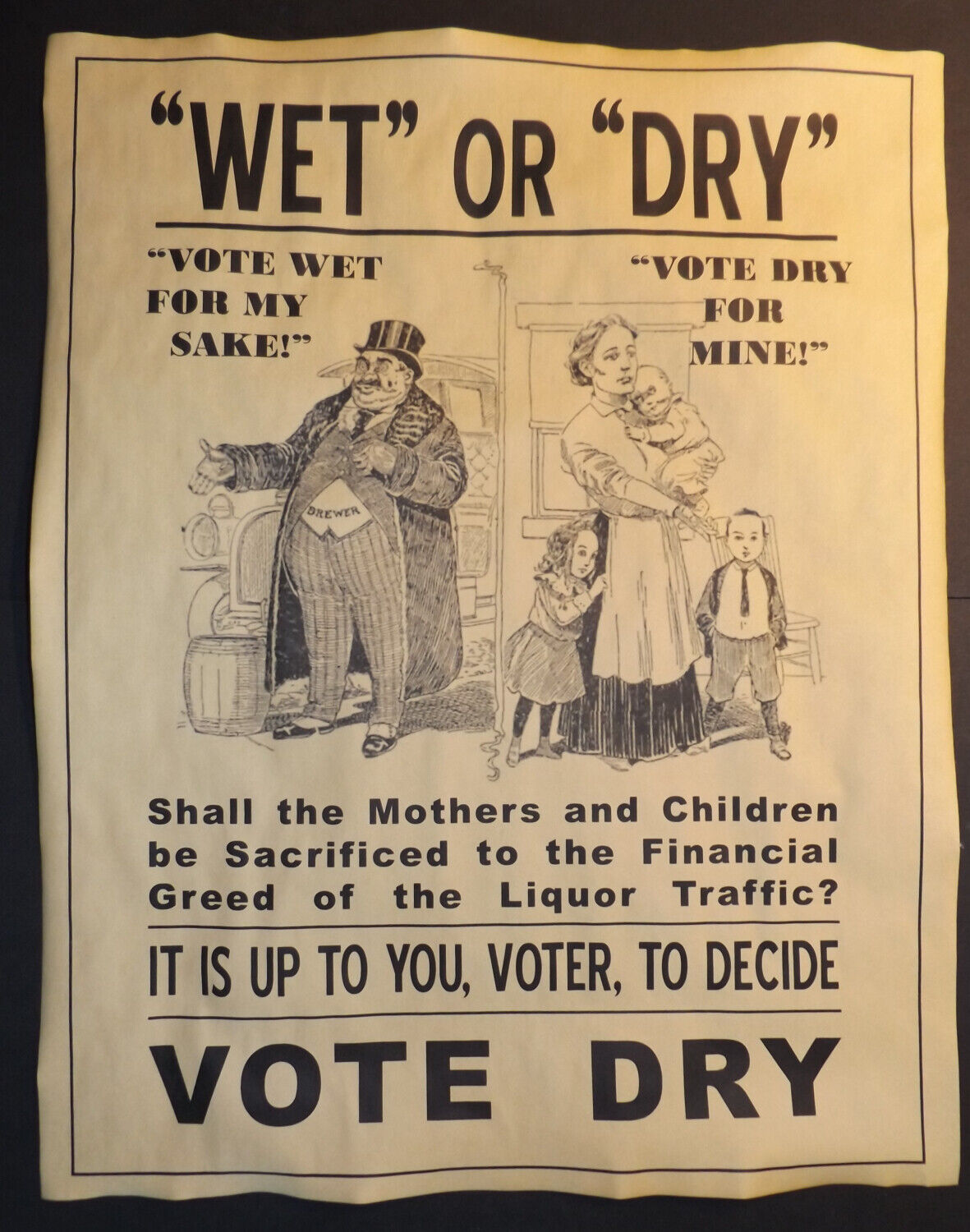
Arguably, the most successful issue group in American history is the Anti-Saloon League — a membership organization formed to achieve Prohibition. The Anti-Saloon League did not care if a legislator was a Republican or Democrat, but only if the legislator was “wet” or “dry.” The Anti-Saloon League not only overcame the money of the brewers and political machinery of the saloons, they amended the U.S. Constitution — the hardest thing to do in American politics – four times.
How did they do it? They “controlled the margin” of victory in the primary elections of both political parties.
For example, if 9,000 voters are expected to vote in a particular race, then a group doesn’t need to find 9,000 new voters, persuade 4,501 voters, or some combination of the two. They only need to find enough voters to cover the likely margin of victory.
If the last election went 4,700 – 4,300, then the margin of victory was 400 votes. Therefore, if a group can demonstrate that it can mobilize a block of 500 voters willing to cast their vote based on that issue, then that is more than enough to “control the margin” of victory.
Elected officials rarely try to change voters’ minds. What elected officials are really good at is detecting where the voters are on a particular issue, and reacting to it at any point in time. For elected officials to see the writing on the wall, issue organizations do not need to win the majority of seats in a legislative body. If one side of an issue wins enough races where the candidates’ positions on the issue are clear, then other elected officials tend to fall in line because the most accurate polling data is an actual election.
So if you are waiting for a candidate to emerge that speaks to your issue, then stop. Change doesn’t happen that way. We arrived at our current political moment through decades of issue organizations struggling each electoral cycle to move the football a few yards at a time. If history isn’t persuasive, then here’s a two minute video explaining it mathematically.
Which primary should you vote in? It depends. Where do you live? Who is on the ballots of both parties? What issues are you trying to advance? Where is your vote the most effective?
What do you do if a candidate doesn’t completely agree? Well, democracy is like public transportation. It will not end well for you if you keep skipping work on rainy days just because the bus doesn’t stop right in front of your building. Catch the bus that gets you closest to where you want to go.
Finally, it may take a while. Our current political situation did not happen because of one election. It developed over decades of elections. Getting to where you want to go will likely take just as long. The wildly successful Anti-Saloon League worked for 30 years. Ending a woman’s right to choose took 50 years. Women’s suffrage required more than 70. But if you are sitting an election out, then you are falling behind.