

Lesson One: Truth and Consequences
Episode One features diplomats, scientists, and others offering their thoughts on climate change; why it matters if we limit warming to 1.5C; and how climate affects people around the world. In this week’s video, you will hear about the existential threat climate change creates for his country from the Honorable Ralph Regenvanu, Minister for Climate Change in Vanuatu. Trigg Talley, former lead climate negotiator for the United States State Department talks about how our failure to address climate change is a failure of imagination. Theologian Rev. Dr. Barbara Rossing offers her thoughts on the connection between the geologic cycle and the Creation story found in Genesis 1.
Lesson One raises the fundamental question of this study: If we know about the harm climate change causes people all over the world, why do we fail to act? Check out the additional resources available in the lesson materials and on the website for more details on the scientific side of climate change and other opportunities for reading and understanding this important justice issue.

Lesson Two: Jeopardy versus Justice
In this week’s video, we hear from experienced leaders in the work of climate justice. Karenna Gore explains the origins of the Global Ethical Stocktake and why it’s so important to engage this question from a moral and ethical perspective. UNFCCC Executive Secretary Simon Stiell reminds us of the high stakes of urgent climate action. Fiji’s delegation describes the high stakes of climate change for small island states and emphasizes the importance of the recent decision of the International Court of Justice, which mandates that states take scientific findings about climate change into account when writing policy. Collin Rees of Oil Change International turns to Pope Francis and Pope Leo for inspiration when talking about climate change as a moral and economic problem.
This week’s Global Ethical Stocktake question is “Why do we continue with production and consumption models that harm the most vulnerable and are not aligned with the 1.5C mission?” Be sure to check out the additional resources provided in this week’s lesson plan, including prayers, lectionary readings, and an explanation of what policymakers mean when they talk about a “just transition” away from fossil fuels.

Lesson Three: The Price is Wrong
In this week’s video we hear from more international experts about the role of climate finance in meeting goals for both adaptation and mitigation. Ugandan climate activist Patience Nabukalu talks about the tension between the need for adaptation and mitigation projects in Uganda. Joy Reyes, from the London School of Economics, will tell us about the work of indigenous people using litigation to fight for climate adaptation projects. Maro Maua issues a stirring call for the United States to use its influence to fight for just and ethical climate action. Bread for the World’s Rev. Eugene Cho and Karenna Gore of Union Seminary reminds us why faith communities are well-suited to the work of calling for climate action.
This week’s Global Ethical Stocktake question asks how we can “ensure that rich countries, major producers and consumers of fossil fuels, accerate their transitions and contribute financing for these measures in the most vulnerable countries?”
If “climate finance” is a new term for you, you can find more information in the COP Lesson part of the lesson plan and the glossary. A suggested prayer and lectionary passages are also provided to support your discussion of this important climate justice issue.

Lesson Four: How You See It
This week’s video considers how traditions, histories, and practices from our faith communities teach us to live in greater harmony with nature. Faith leaders like Sister Jayanti of Indian, Rev. Eugene. Cho of the US, and Patience Nabukalu remind us of the call for humans to care for creation found in the Hebrew Bible. Climate advocate Harjeet Singh offers thoughts from the Sikh perspective on integrating faith with care for the environment. And Rev. Christina Cosby of the Presbyterian Church (USA) speaks about the power of interfaith dialogue and collaborative work for climate justice.
In the last few lessons we have learned about climate impacts and climate action all around the world and considered ways our faith helps us think about the need for climate action. We have wondered about the ways the Christian call to generosity and care for creation motivate us to work for climate action as a way to love our neighbors around the world. And we have heard from experts on everything from agriculture to theology who have invited us to meet this important moment with action and hope.
This week’s Global Ethical Stocktake question is “What traditions, histories, or practices from your community teach us to live in greater harmony with nature?” Look at the COP Concept to learn more about how the multilateral negotiation process helps us learn from indigenous communities and our neighbors from the Global South.
Lesson Five: Wheels of Fortune
Coming Soon!
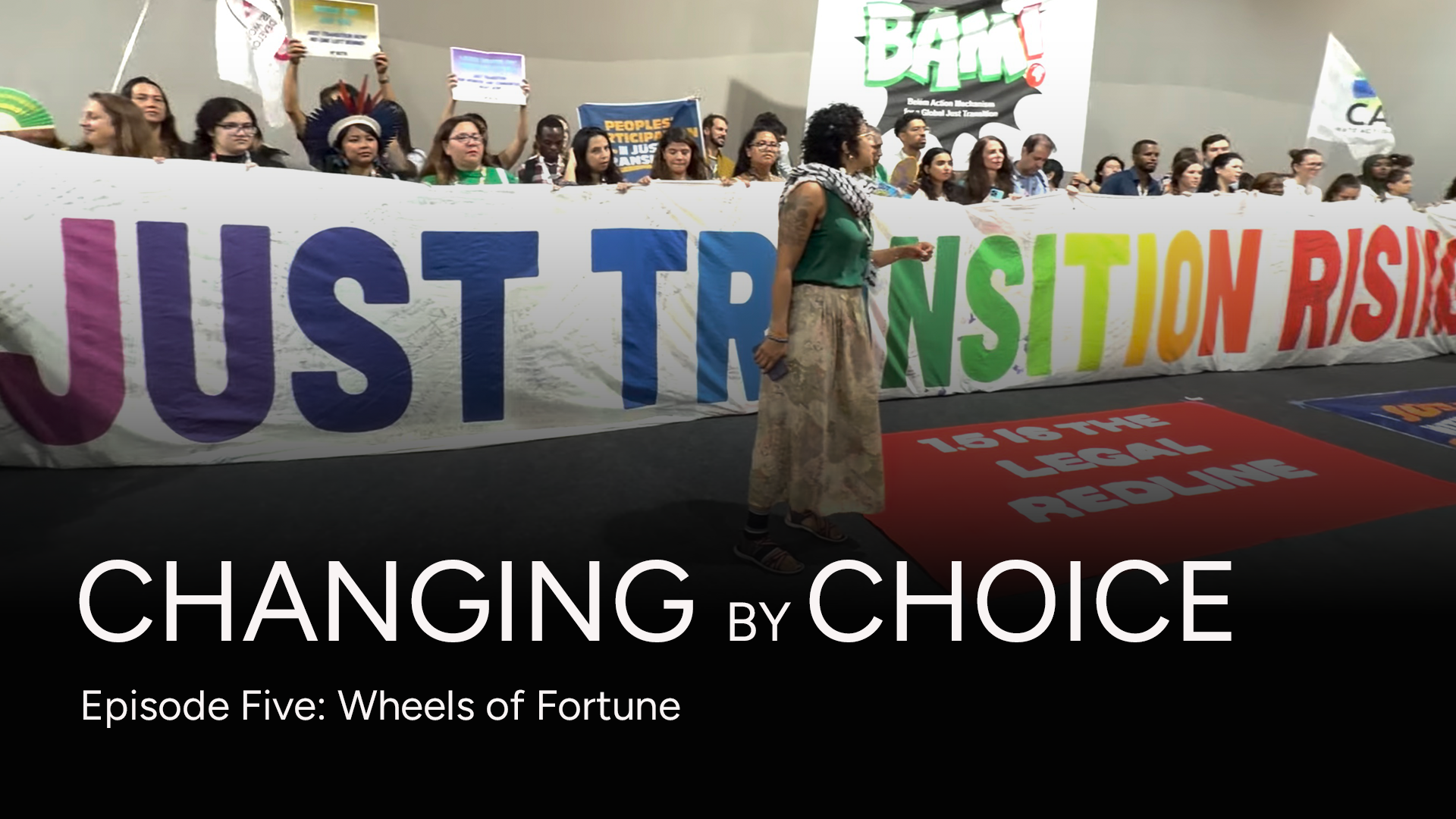
In our fifth and final Changing by Choice video, experienced climate leaders talk about the importance of cooperative action. Trigg Talley, retired lead US climate negotiator joins us again to talk about the Paris Agreement and America is All in. Christiana Figueres uses the metaphor of the butterfly migration to talk about the importance of continuing the work over time. Director of the Center for Earth Ethics at Union Theological Seminary Karenna Gore calls us to speak the truth, following the guidance of our heart and faith. And Sister Jayanti of India calls us into a life of simplicity and care that will benefit not only ourselves but the community and the world.
Coming Soon!
During our time together we have considered ways that our faith helps us think about and understand the problem of climate change. We have heard from people from all over the world about the devastating impacts climate change has on people and communities. We have considered important topics like hunger and famine, drought, sea level rise, and the rights of indigenous people. We have learned about the United Nations Framework Convention on Climate Change and the international community committed to doing the work of climate action.
We hope this series has provided a renewed sense of the urgency of this multifaceted problem, and empowered you to join the growing crowd of people of faith calling for just and equitable climate action. In the last lesson, we explore ways to bring more people into the conversation. How can we mobilize leaders from business, government, education, and other sectors to work for climate action? What ideas and morals guide us in our work?