|
This week marked the start of the Hebrew year 5786: Rosh Hashanah started on September 22, the beginning of the Jewish High Holy Days that conclude with Yom Kippur, which this year starts on October 1. It’s a period of reflection, reconnection, repentance, and recommitment. This year, Rosh Hashanah coincided with the autumnal equinox, the day that marks the transition from summer to fall (in the Northern Hemisphere), bringing increased attention to the theme of balance for many people, as well as themes of harvest, preparation, and connection to the Earth.
The festivals and seasons of our faith and cultural traditions don’t submit to the 24-hour news cycle, and the planets don’t change their rotations in response to human events. We depend on our customs, and cues from the natural world, to provide context and predictability in our lives, individually and collectively.
The frameworks of seasons and holidays allow us to structure our activities, so we aren’t caught off-guard. Planning to feast or fast; shopping for gifts or decorations; saying or singing special words; and committing to be at a specific location are all ways we prepare to participate. We count on others in our community to keep us on track.
The processes of democracy function like seasons, with elections representing one kind of “festival.” Just like other festivals, elections have preparation periods and deadlines. They involve activities we don’t normally do, and we rely on each other as members of a community to keep each other accountable.
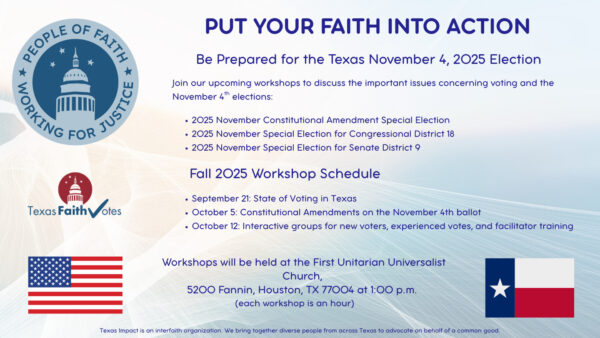
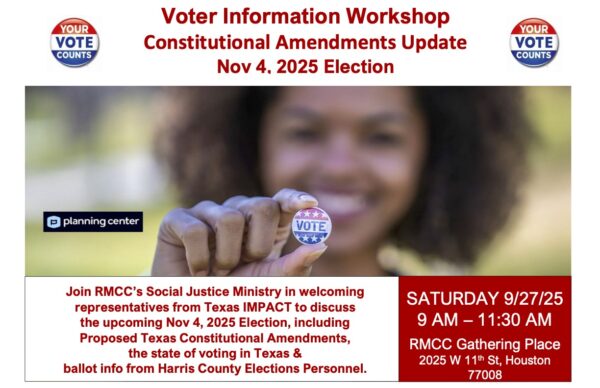
In just a few weeks, on November 4, Texas voters will go to the polls to consider 17 (!) proposed constitutional amendments. The deadline to register to vote in the November election is Monday, October 6. The first day of early voting is Monday, October 20, and the last day of early voting is Friday, October 31. You can find information about the election on the Secretary of State website, including the list of the 17 proposed amendments, or “propositions,” and explanations of each proposition in English and Spanish.
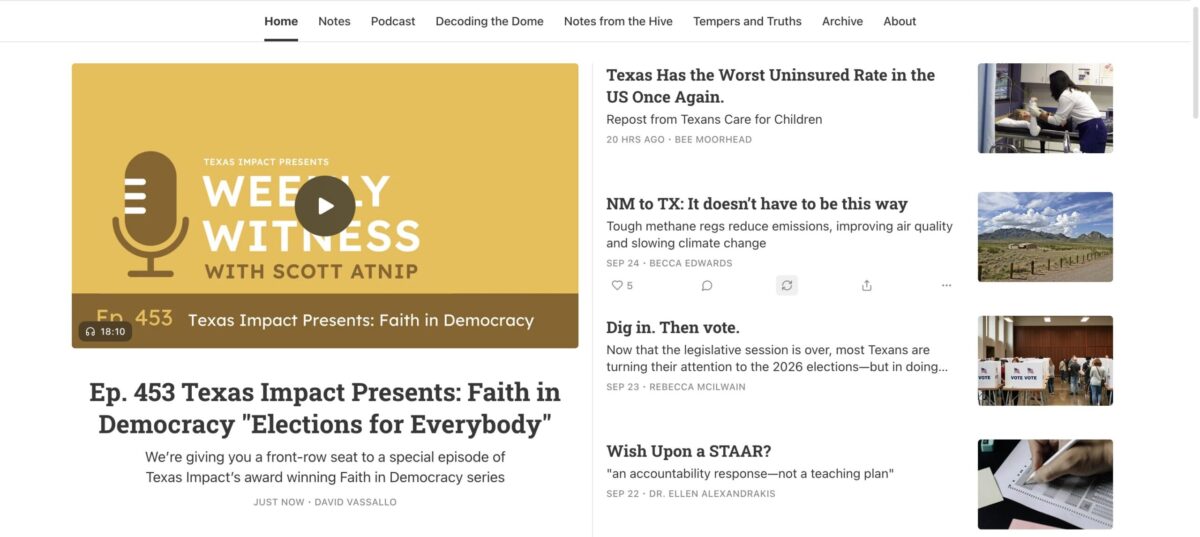
In our blog, Rebecca has published the first in a series of posts unpacking the propositions in more detail. This week, her post focuses on the property tax-related items, which account for about half of the propositions. Texas Impact staff are scheduled to give presentations on the 17 propositions at several congregations in Houston and Dallas, some of which will be live-streamed or recorded for YouTube. We’re posting resources specific to this election on our Action Center page, and you can find evergreen resources for faith-based civic engagement and voter mobilization on our Texas Faith Votes page.
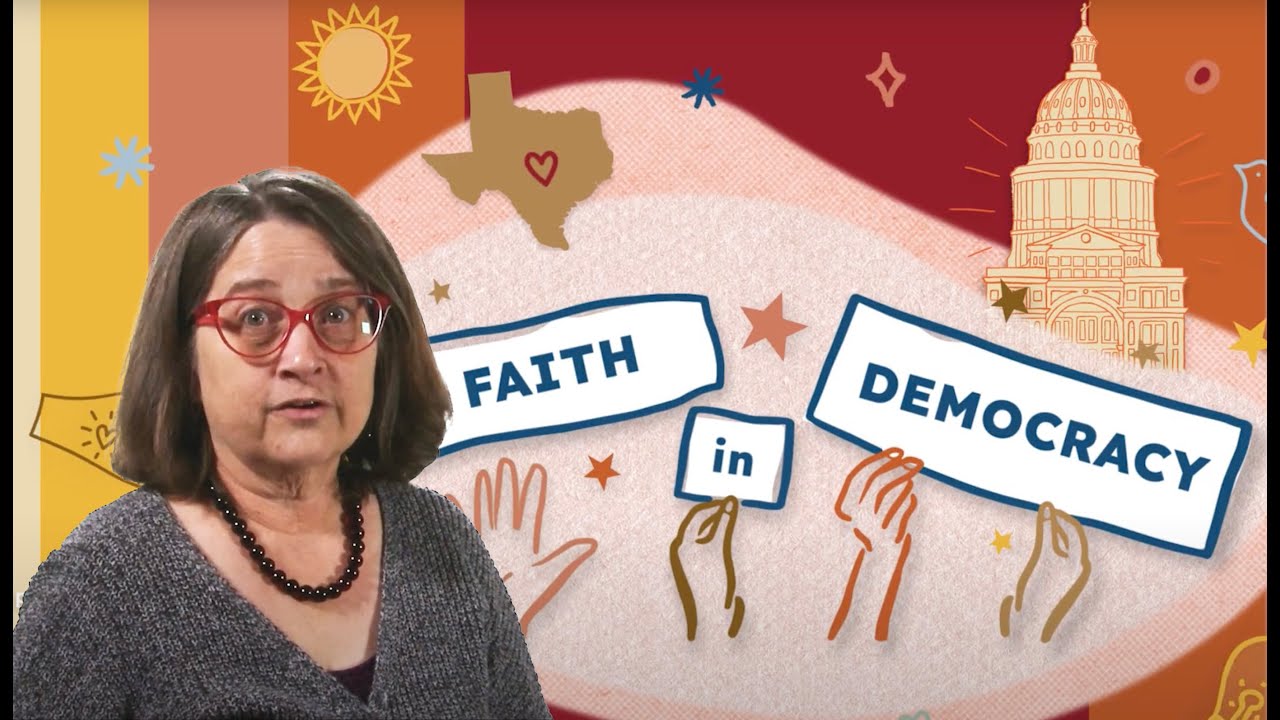
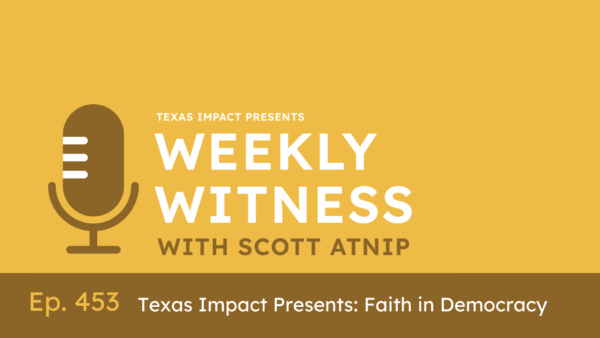
And we’re rolling out a special episode of Faith in Democracy about voting in Texas, and why you should absolutely vote in this and every election. In this episode, we lay out the last 25 years of election reform, from the fallout from the 2000 election to the sweeping changes since then, and how voters can navigate our state and federal election laws to exercise their franchise.
Structure, context, and predictability feel in short supply for a lot of folks right now, but don’t fall for apathy, fear, denial, or despair. Remember: our democracy functions best with vigorous use. Starting now, let’s make 2025-2026 the best election season yet! |