|
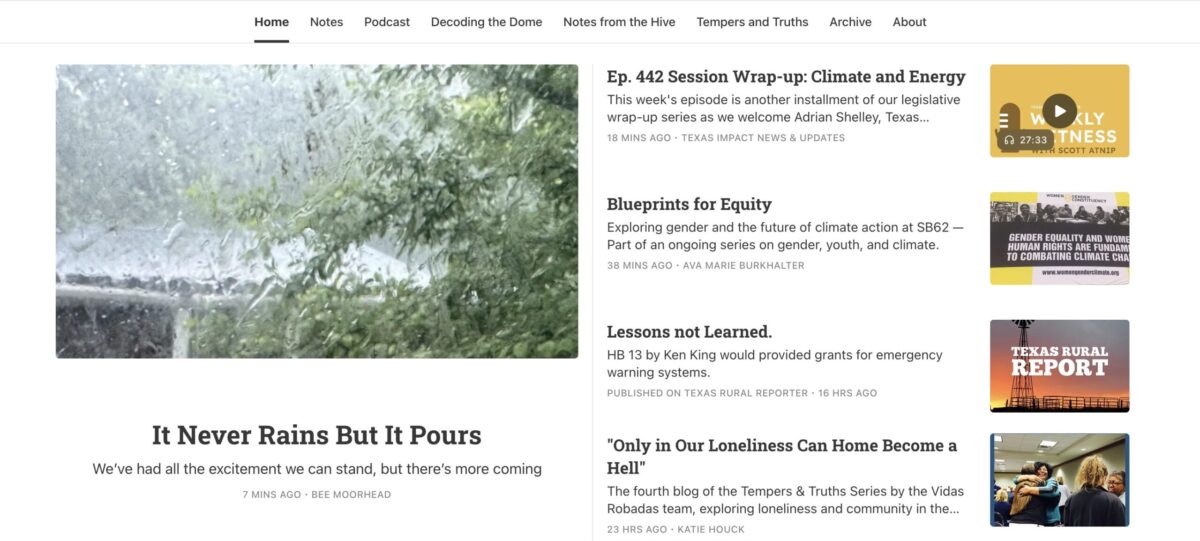
This week, it rained and it poured.
Texas Impact staff join all Texans in grieving the loss of lives and livelihoods in the Hill Country. We also join many of our friends and colleagues who have expressed consternation at the way social media has amplified controversy around the flooding and responses to it. Becca counsels, “It is human nature to respond to our own pain and fear by searching for someone to blame after a natural disaster. But many accounts suggest that this storm simply exceeded our ability to anticipate its severity.”
Becca continues, “Conversations about early warning systems, emergency communications, and funding for emergency response and weather monitoring at all levels of government are starting to happen even now. These are a needed and compassionate response.” With emergency response and disaster management at the top of the governor's list for the upcoming special session, our friends at the Texas Rural Reporter offer this level-headed take on the need for an all-hazards approach and forward thinking. Our Sierra Club colleagues published this comprehensive post covering the current state of flood planning and preparedness in Texas. And Texas energy guru Doug Lewin unpacks the role of climate change, which is leading to more severe weather events.
We are glad to see disaster management and emergency response on the governor’s special session proclamation. However, most of the issues on the proclamation are not emergencies. The list includes several topics—such as tighter abortion restrictions, anti-trans bathroom regulations, and prohibitions on local government lobbying—that did not advance in the regular session and have not undergone any change in circumstances to warrant revisiting them.
Congressional redistricting, also on the proclamation, is definitely not an emergency: Texas is under no obligation to undergo redistricting until the next US Census is conducted in 2030. However, the US Department of Justice sent this letter to the governor and attorney general this week, urging the state to redistrict because of what the DOJ describes as unconstitutional “coalition” districts in Dallas and Houston. The DOJ argues that, although the districts are majority-minority, which is permissible, their majorities don’t all belong to the same minority, which makes them “racial coalitions.” All four of the districts in question are drawn to favor Democrats. One of the districts belonged to Cong. Sylvester Turner, who died in January. The governor delayed calling an election to fill Turner’s seat until November 2025, so if the legislature draws new districts it could impact that election.
Texas Impact will be fully engaged in the special session, which starts July 21. To help our network prepare, we will restart our weekly Zoom meetings on Monday, July 14, at noon. Register here to receive the link
One item that did not make it onto the governor’s list? Texas’ response to the federal budget reconciliation act, which President Trump signed into law exactly one week ago (yes, really). Governors in other states are beginning the implementation process, including calling special sessions to pass conforming legislation; identifying needed budget adjustments; and directing state agencies to evaluate the impact the reconciliation package will have on their programs.
The reconciliation act will impact Texas in a host of ways that will demand a legislative response. For example: the healthcare provisions in the reconciliation package are expected to cut Medicaid and Marketplace health insurance for more than 2 million Texans; the food assistance provisions will force the Texas Legislature to spend more than $700 million a year in state funds on SNAP; the rollbacks of clean energy policies are projected to cost Texas households $48 billion in extra electricity costs over 10 years and cost Texas more than 100,000 jobs.
No public policy can mitigate against all catastrophes—but public policies can mitigate against many risks, and facilitate adaptation in the face of unavoidable change. No amount of preparedness can protect us from every harm, but prudence and collective action can help minimize damage, and soften the pain we can’t prevent.
We’re grateful for your commitment to prudent public policy and community mobilization. Let us know how we can support your work.
Love, |