|
Dear {name},
This week—a week of incomparable spiritual importance to millions of Texans—has offered a reminder of how political power reacts when it collides with principled opposition.
On Thursday, the Texas House finally passed its version of SB2, the voucher bill, which would appropriate $1 billion in state general revenue to pay private school costs for some Texas families. The voucher program, which supporters refer to as “Education Savings Accounts,” will provide $10,000 per child for private school tuition, among other costs.
There is no cap on family income, so even very wealthy families can access the program. The bill includes funding for the Comptroller of Public Accounts to market the voucher program—essentially making the state's revenue agency responsible for encouraging Texans to withdraw their children from public schools in the hope they can get taxpayer-subsidized tuition at private schools that may or may not accept their children. The program includes minimal accountability for private schools, and even less transparency for lawmakers to learn about which Texas parents are applying for funds.
Democrats offered more than 40 amendments to SB 2, all of which were tabled on party line votes. Among the amendments were proposals to strengthen transparency and limit the program’s growth in the state budget over time. Rep. James Talarico proposed an amendment that would have sent the issue of vouchers to voters on the November ballot—an idea that gained popularity with the public over the past several days but which the bill’s author, Rep. Brad Buckley, moved to table with no discussion.
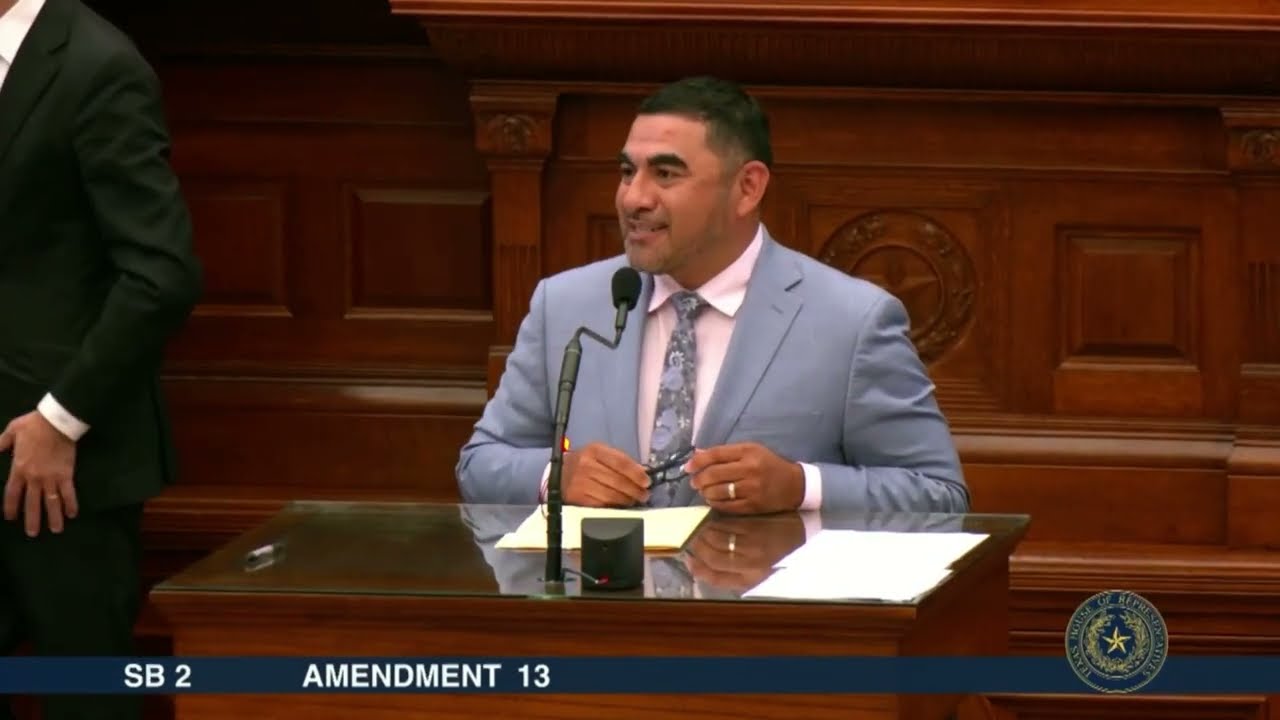
Rep. Armando Walle was one of several members who offered amendments to limit the voucher program to low and moderate income families. Walle pointed out that the primary source of general revenue is sales taxes, and mused “It’s kind of perverse for low-income parents to pay sales taxes to support private school subsidies for the children of the wealthy.” |